
Railway guide
Railways
Rail is the right tool when a corridor has steady passengers or cargo and the road is about to become the traffic problem. It is the wrong first tool when you have not proved the flow. This page explains how to choose, where to put the station, and how to leave the line editable as towns grow.
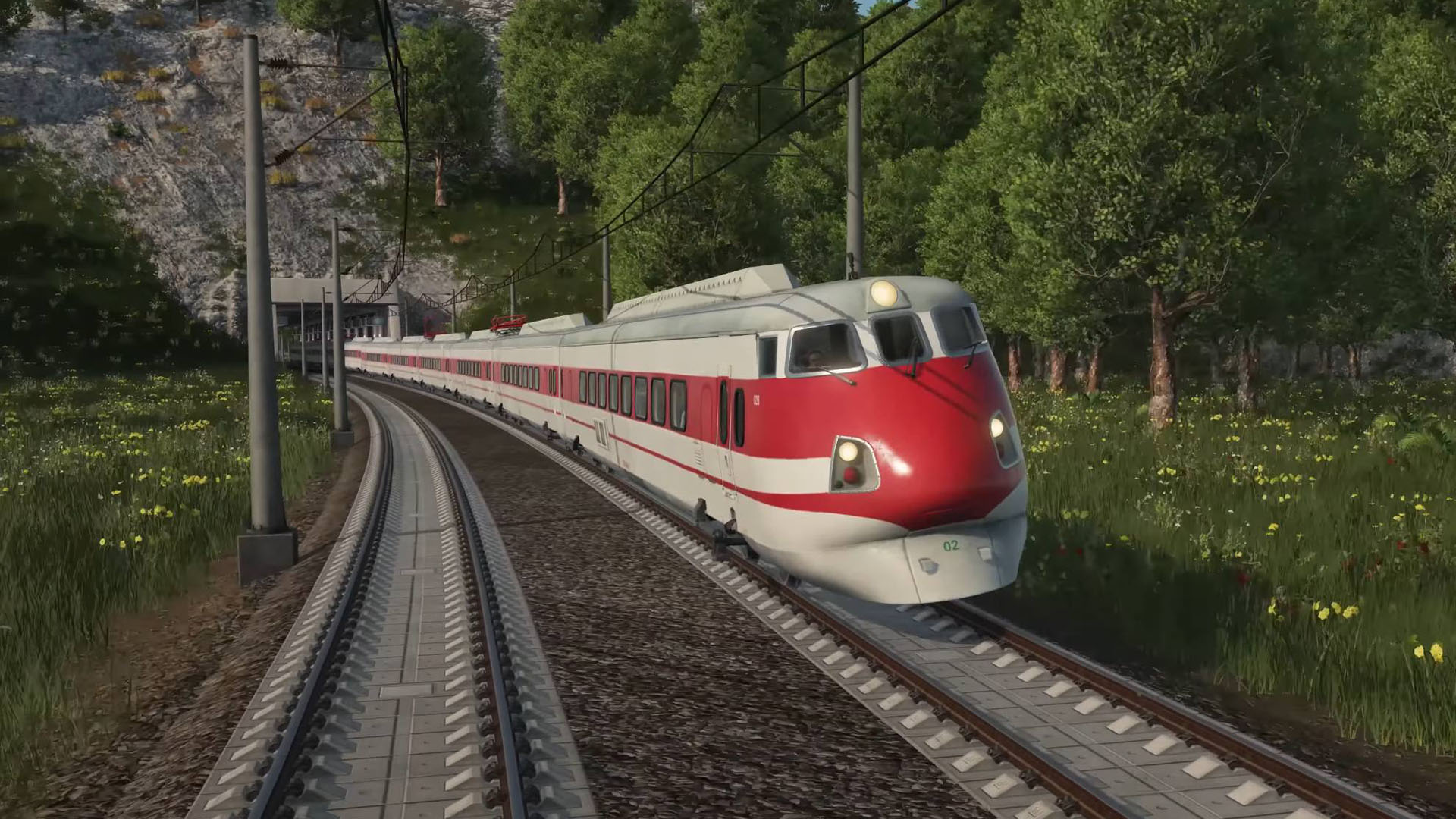
Pick the infrastructure that matches the job.
Transport Fever 3 lets networks grow from country roads to highways and from older rail toward high-speed track. The upgrade is earned by volume and by time, not by laying the final form on an empty map.
Use the table as a filter before you spend. It does not list vehicle stats, because those belong to the model you unlock in a given year. It lists the planning reason to prefer one mode.
| Infrastructure | Use it when | Watch this rating | Usual mistake |
|---|---|---|---|
| Country road | The first link between two hamlets, or a bulk cargo that can arrive slowly | Traffic, once the towns grow | Keeping freight on that road after it becomes the high street |
| Highway-style road | Private traffic and through trucks need a path that is not the residential street | Traffic and noise | Building it through homes because the straight line was shorter |
| Early rail | The same cargo or passengers already fill more than one road vehicle on a repeating run | Noise at the station, reputation if the earthworks are huge | A one-track dead end with no room for a second platform |
| High-speed rail | A long passenger relation where travel time is hurting satisfaction | Satisfaction, and noise if the station sits in housing | Using it for stone or another patient bulk good |
| Sea or air | Sea for patient bulk cargo; air when the deadline or the distance justifies the cost | Delivery time, pollution, reputation if an airport reshapes the land | An airport cut into a forest before the towns can fill a plane |
Before you lay rail
- Confirm the flow on a cheaper mode, or be looking at a distance road vehicles cannot serve without wrecking traffic.
- Mark a station site on the edge of housing, with space for a second track and a small bus or tram loop.
- Check the height. Summit Stopover wants a train to call at a station above 500 meters. That is a project for a map that has the terrain, not a reason to force a spiral on a flat town.
- Budget the reputation cost of cuttings and embankments. Large earthworks anger residents. A poor reputation recovers over time, and it still slows the town while it is low.
- Decide whether passengers and freight share the station. Sharing is simpler. Separating them is how you keep freight noise off the passenger walk.
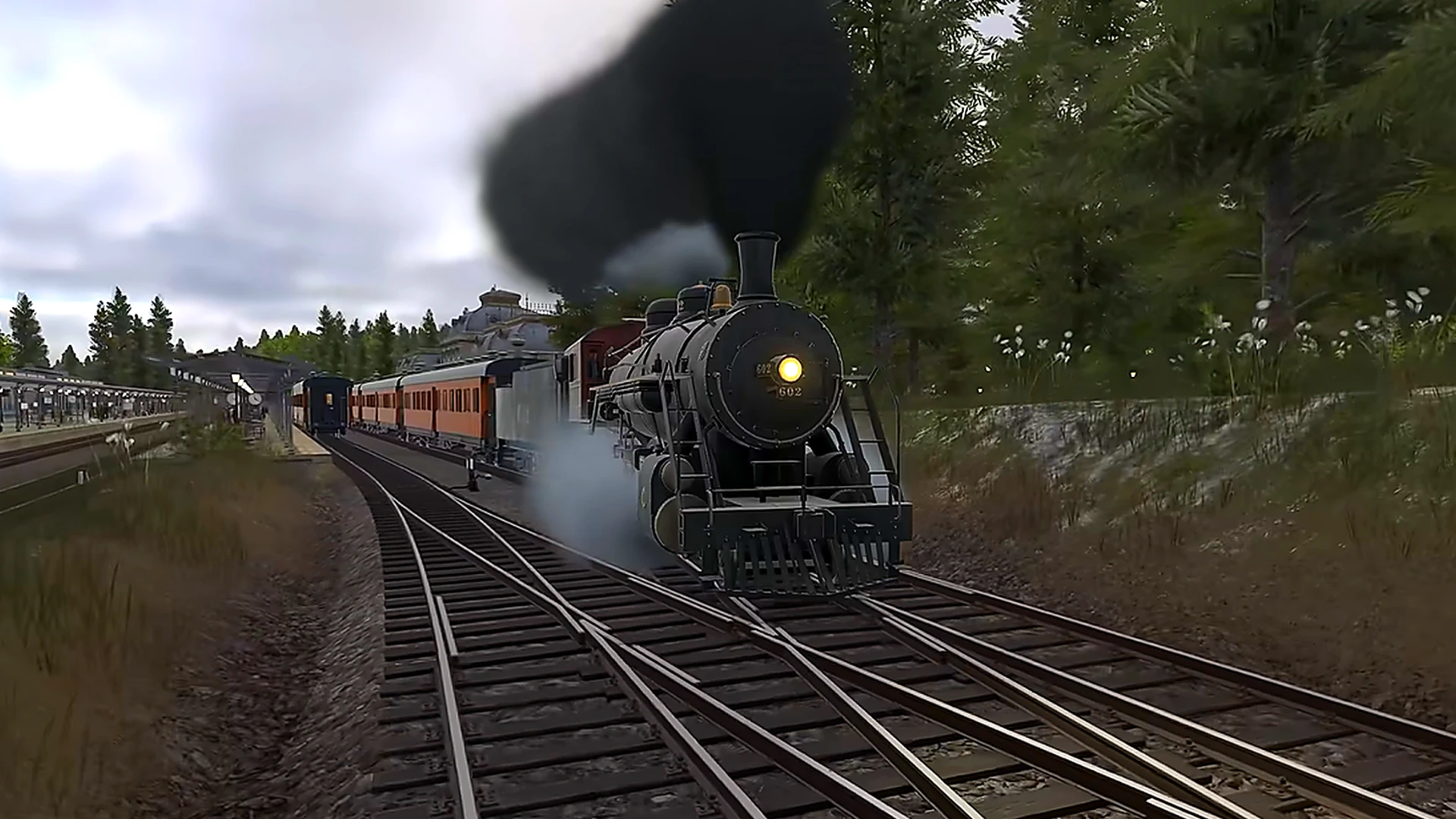
Stations are part of the city’s score
A station is not a picture frame around the trains. It is a walk for residents, a noise source in residential areas, and a piece of infrastructure that adds pollution across the municipal area. Short walks raise the chance people use the line and can support satisfaction. Short walks through a freight yard do the opposite. Put people on the quiet side and wagons on the side that does not face homes. Connect the two with a road that does not become the town’s only street.
Step by step: a first corridor
One railway between two towns that already exchange passengers or a repeating cargo. Nothing else until that corridor pays its upkeep and does not sink the noise rating.
Step one: run the relation by road long enough to see leftover passengers or cargo. If one vehicle clears the stop every time, rail is a monument. Wait. Step two: choose the straighter alignment that avoids the largest earthwork, not the alignment that clips the most buildings. Step three: place both stations with a spare strip of land beside the track. You will want a passing loop or a second line when frequency rises. Step four: start with enough trains to keep the wait tolerable, not with a parade. Every train adds cost. Step five: open the noise layer at both towns. If homes are covered, add the quiet local link and accept the extra maintenance, or move the station while the town is still small. Moving it later is the demolition cycle the achievement Perfectionist is teasing: demolish and rebuild a station twice in a row. You can earn that once on purpose. You should not earn it by accident on every town.
Example. Two towns ship stone one way and people both ways. Stone tolerates a slow trip, so the stone can stay on a road or even a ship if water is direct, while the railway is reserved for passengers whose satisfaction cares about travel time. Mixing them on one train is convenient only if the station can separate the noise and the platform wait stays short. If the combined train waits to load stone while passengers stand there, split the services. The passenger train’s job is the clock. The stone train’s job is to be cheap.
As the years advance, newer rail vehicles appear and older ones remain available. The achievement Oldschool is specifically to use a steam locomotive in the 2000s, which only makes sense because the game lets eras overlap. Keeping a steam engine for that goal is a choice. Using it as your only intercity train in a later decade is a satisfaction risk if a faster train exists and the ride is long. Park the steam engine on a short line, or bring it out when you are ready to claim the achievement, and let the corridor that people rely on use the quicker stock.
Infrastructure habits that scale
Roads and tracks both count toward Around the World, which asks for 40,075 kilometres of streets and tracks across free games combined. That number is not a reason to pave empty ground. Idle infrastructure still has a construction cost, and extra lanes through a town can worsen noise and the land you disturb. Build length that carries a vehicle. The achievement will arrive over many maps if you play long enough. It should not arrive because one map is a knot of unused track.
High-speed track belongs on the passenger relation whose travel time is the complaint in the satisfaction layer. It does not belong under a quarry. Helicopters and offshore platforms are a different infrastructure family: the achievement Offshore is the first helicopter landing on an oil platform. Build that link when you actually have an offshore industry to serve, and keep the helipad’s noise and the approach path out of housing. Airports have the same reputation warning as any large earthwork. If the terrain must be reshaped, do it once, away from the homes, with room you will not have to scrape again in twenty years.
Beginner version: one single-track corridor, two stations with spare land, road feeders that do not enter the station through a residential square. Advanced version: passenger and freight stations separated, a passing place so one late train does not freeze the line, and a local bus or tram whose only job is the last kilometre. Both versions fail if you never open the noise and traffic layers. The vehicle guide covers how many trains the corridor should have once the track exists. The economy guide covers how to tell whether those trains are earning their keep.